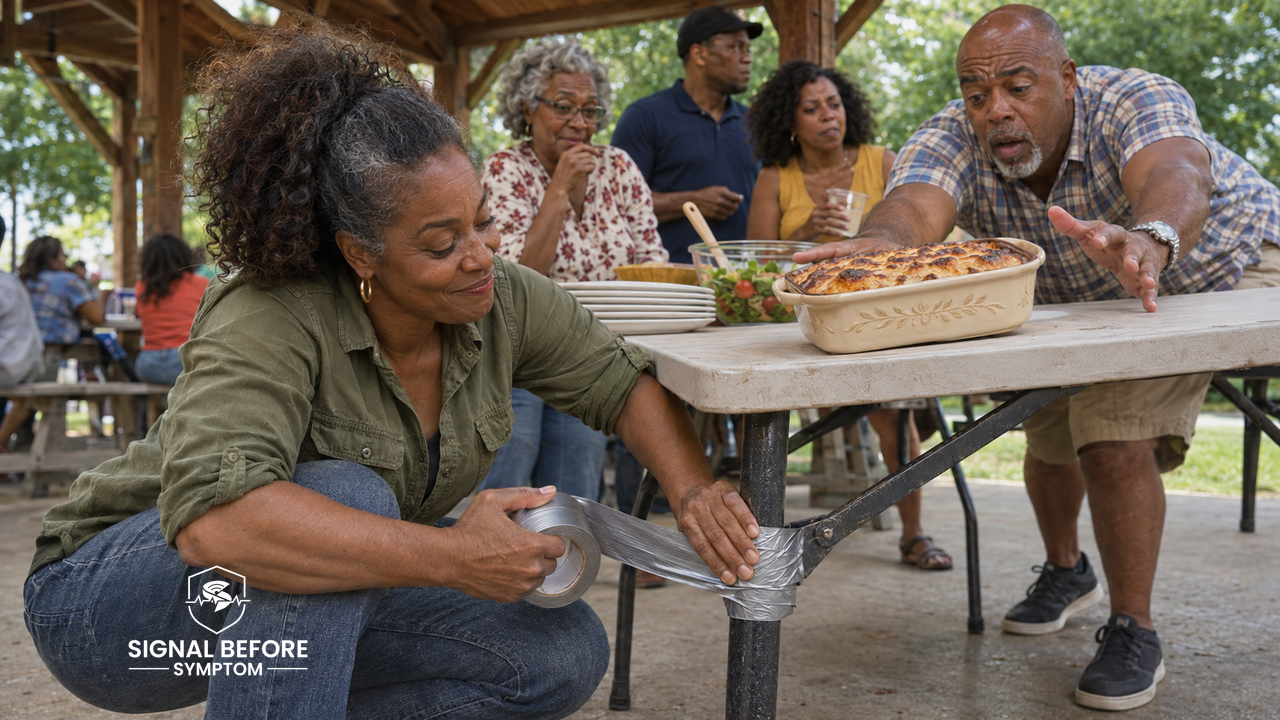
Handier than duct tape at a family reunion.
If you are building menopause technology, that is a reputation worth chasing. Help a woman make sense of what she is experiencing, prepare for a care conversation, or keep a useful record without turning her life into a research assignment. Give the technology a job she actually wants done. Then let’s talk about a healthcare market your company ought to be studying: VA.
Guess what, industry? Women Veterans are already here. If your picture of VA only includes men, your market research needs to get out more. Be advised. There is a women’s health conversation to join, and I want serious companies bringing useful ideas into it.
Women Veterans Are Already Here
VA reports that about 930,000 women Veterans were enrolled in its healthcare system in 2023, and approximately 650,000 sought its medical care that year. Enrollment and care use are different counts. Neither tells us how many women are experiencing menopause, want a wearable, or would benefit from your particular product.
What those figures do tell industry is that women are already part of the VA healthcare population. You do not need to invent a customer category before you investigate a relevant need. You need to understand the women you hope to serve, the problem they want help with, and the care setting where your technology could contribute.
VA already provides menopause care. Its guidance points women to their VA primary care provider and describes Women Veterans Program Managers as a resource for coordinating services. There is an existing care conversation to learn from. A company exploring this space has somewhere concrete to start its homework.
A New Feature Opens a Useful Question
Oura describes its Menopause Insights Hub. The company describes a symptom impact assessment and a downloadable report that can include relevant symptoms, their impact on quality of life, and trends. The woman supplies the answers about her experience. Those answers are not a hormone test.
That distinction does not make the feature uninteresting. Quite the opposite. A tool does not have to perform a medical miracle to deserve investigation. Helping somebody organize what she has been experiencing could be a useful contribution. Whether this particular feature improves a care conversation, and for whom, is something to evaluate.
Imagine a woman Veteran trying to explain several weeks of changing sleep, concentration and daily life. “Something is off” may be honest, but a record could give her more to work with at the appointment. She should not need a TED Talk to explain a Tuesday. Can technology help her describe what changed and what matters most to her?
That is a worthwhile question for product teams, researchers and VA clinicians to explore together. It starts with a specific possible benefit. It leaves room for the women using the tool to tell us whether the idea is useful, irritating, reassuring, or missing the point entirely. Ask what they would change.
Build With the Women You Want to Serve
If I were helping a company investigate this opportunity, I would begin with the women and the job. What is hard to remember or explain? What would they want to bring to a conversation? What information would they rather keep private? What would make them want to use the tool again?
I would also want the receiving care team involved early. A report designed around what the company can display may look very different from one organized around what a woman wants to discuss. Learn that while changing the product is still a normal Tuesday, rather than a meeting with twelve people asking who approved the launch.
Then compare the proposed tool with what people can already use, including an ordinary symptom diary. The interesting result might be easier preparation, a clearer discussion, or less effort to keep a useful record. Pick the intended benefit before the test and be willing to learn something surprising. That is how a promising idea gets sharper.
Privacy belongs in that conversation from the beginning. Explain who can access intimate health information, what the woman controls, and how she can remove it. Put those answers where a person can understand them. Making somebody hunt through a privacy policy with a flashlight is a peculiar way to introduce yourself as helpful.
Early involvement can help a company choose what to measure in an evaluation. Would women feel better prepared? Would the information answer a question the care team actually has? Were women Veterans represented in the evidence, or is applicability still a question? Those answers can help shape a stronger product and a business case grounded in something more useful than enthusiasm.
Put VA in the Plan While You Can Still Shape It
For women’s health companies, this is a reason to put VA into market research and product planning early. Study the relevant services, listen to women Veterans, and identify the clinical or program questions worth exploring. A Women Veterans Program Manager can help coordinate care. That does not make the role a procurement office or an automatic product sponsor.
The next step could be a carefully defined research question or a discussion about product fit. It depends on what you have built and what its evidence supports. A tracking feature, a symptom relief product and a medical intervention need different conversations. Calling all three “menopause technology” does not make them interchangeable.
There is room for commercial ambition here. Companies should want to build a viable business around something people value. The useful work is finding where the Veteran need, the company’s capabilities and a responsible VA path meet. That gives the company a specific opportunity to investigate instead of a large population number to admire.
And please, do not wait until the sales deck is finished to discover the customer. Put VA on the agenda while you can still learn, adapt and decide where to invest. Your next useful insight might change the product, the evidence plan, the support offer, or the market you choose to pursue. That is progress, even when it changes the original pitch.
Bring the Technology and a Better Question
Through JhetVet®, I help companies understand Veteran needs, assess readiness and develop a VA market and execution path. For a women’s health company, that can begin with a practical examination of the intended use, the relevant care setting, the stakeholders to understand, and the work needed to pursue a credible opportunity.
If you are developing menopause or related women’s health technology and want to explore its VA potential, let’s talk. Bring the product, what you know it does, and the question you want to solve for a woman Veteran. We can start with something more useful than “VA is a big market.”
Industry, what are you building that women Veterans should know about, and what would you want to learn from them? VA teams, where could a well designed tool make a meaningful contribution to menopause care? Keep personal medical details private.
The family reunion does not remember which roll of tape had the prettiest packaging. It remembers who kept the table standing. Let’s give women Veterans a reason to remember what your technology helped them do.
Explore JhetVet® Emerging Health, see how JhetVet® helps companies build a VA path, or start a practical conversation about your technology.
Sources
This Article provides educational information and market questions. It does not diagnose or treat menopause, recommend a specific product, establish local VA availability, or represent a VA adoption decision.