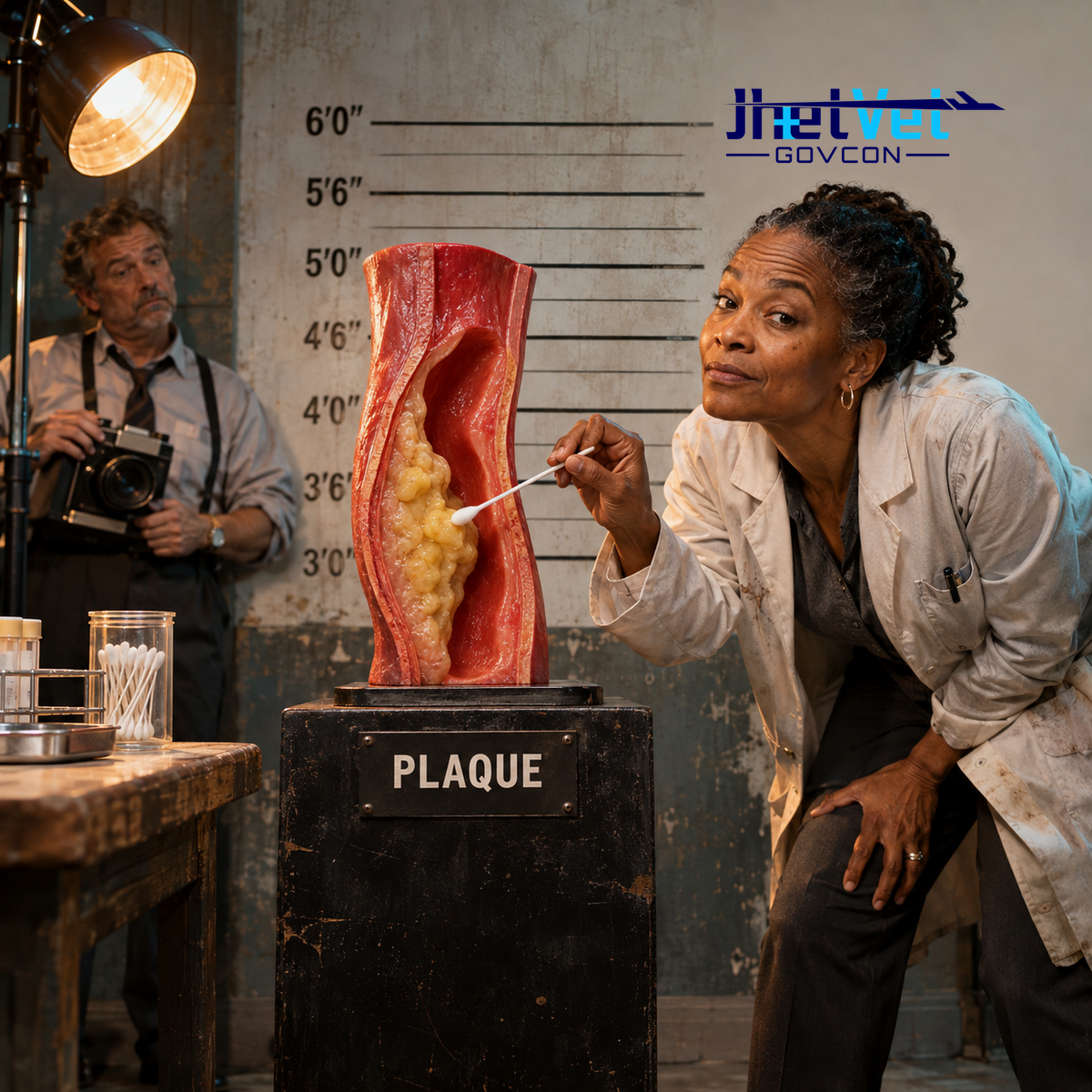
A sharper picture of coronary plaque is useful. Learning more about what the plaque is made of could give a cardiologist a better question to ask. The artery already has a mug shot. What else can we learn about the suspect, and would that information change a justified treatment decision?
UC Davis reported October 20 that its team had completed an investigational study in ten patients of a catheter combining fluorescence lifetime imaging with polarization sensitive optical coherence tomography. The research aims to examine plaque composition and structure together. This is early human work, not proof of better outcomes or a commercially available device ready for every catheterization laboratory.
Give the additional information a clinical job
For a developer, the useful question starts with the decision being made today. Does added tissue characterization change an assessment beyond the imaging already used? Can different clinicians interpret it consistently? What would a change in interpretation justify doing next? A more colorful image can make a beautiful presentation while leaving the cardiologist with exactly the same unanswered question.
My proposed VA application begins with selected women and men Veterans already undergoing clinically indicated coronary catheterization. That is a population to investigate, not a recommendation to send people for an invasive procedure so we can try a new camera. The comparison must be grounded in the care they need and the information already available to their treating team.
San Francisco VA’s public cardiology page lists intravascular ultrasound and optical coherence tomography among its catheterization laboratory services. That provides a specific example of an existing clinical setting. The page carries a 2023 update date; it does not establish a current inventory audit, national capability or use of this investigational catheter. A credible development conversation would confirm the actual local workflow before making a proposal.
Walk through the procedure before the sales forecast
Ask the people doing the work where an additional device would fit. The equipment, sterile supplies, setup, training, interpretation and reporting all have to be considered. A proposed evaluation should establish what information is added and what effort is required to obtain it. If those questions get postponed until after a pilot begins, the pilot may become an expensive way to discover that nobody had time for it.
The research team’s next questions and a manufacturer’s market questions overlap, but they are not identical. Early feasibility can show that a procedure can be performed. A company still needs to investigate reproducibility, meaningful clinical decisions, practical support and the evidence needed for its intended claims. Research permission, clinical adoption and purchasing require distinct work. One encouraging result does not sign all three forms.
Representation belongs in that evidence plan. The public announcement covering ten patients does not establish that the findings represent women Veterans or every patient subgroup a company hopes to serve. Ask what the study actually supports, which people need further evaluation and whether the proposed use is narrower than the market presentation. That is a better discussion than calling everybody a prospective customer.
Build a pursuit that can survive a real conversation
A sensible next step is a bounded discussion with the appropriate clinical and research stakeholders about the decision worth investigating. Define the comparison, the outcome that would make further work worthwhile and the reasons to stop or adjust. Involve the appropriate authorized VA officials for any actual arrangement. A willing clinician can help define a problem; enthusiasm alone does not create an acquisition.
This is the work JhetVet® helps companies organize: assess readiness, define the Veteran use case, map stakeholders and purchasing paths, and develop the infrastructure and execution plan around a credible opportunity. The manufacturer needs to bring the exact product, evidence, technical support and an honest account of what remains unresolved. A brochure can start the discussion. It cannot stand in for the people who would have to make the technology work.
Imaging and catheter developers: which specific clinical decision would your added information improve? VA cardiology teams: what would make that information worth the procedure time and interpretation effort? Bring JhetVet® the decision, the evidence and the operational question your team cannot yet answer. We can investigate whether there is a viable VA path and what pursuing it would require.
The interesting possibility is better understanding at a consequential moment in care. Let’s find out whether the additional chemistry earns a place beside the mug shot.
Discovery credit: BIOMEDICAL-IN-THING. Research: UC Davis Health and its National Center for Interventional Biophotonic Technologies. The image is a staged editorial metaphor, not a clinical demonstration. Explore more GovCon Insights.